
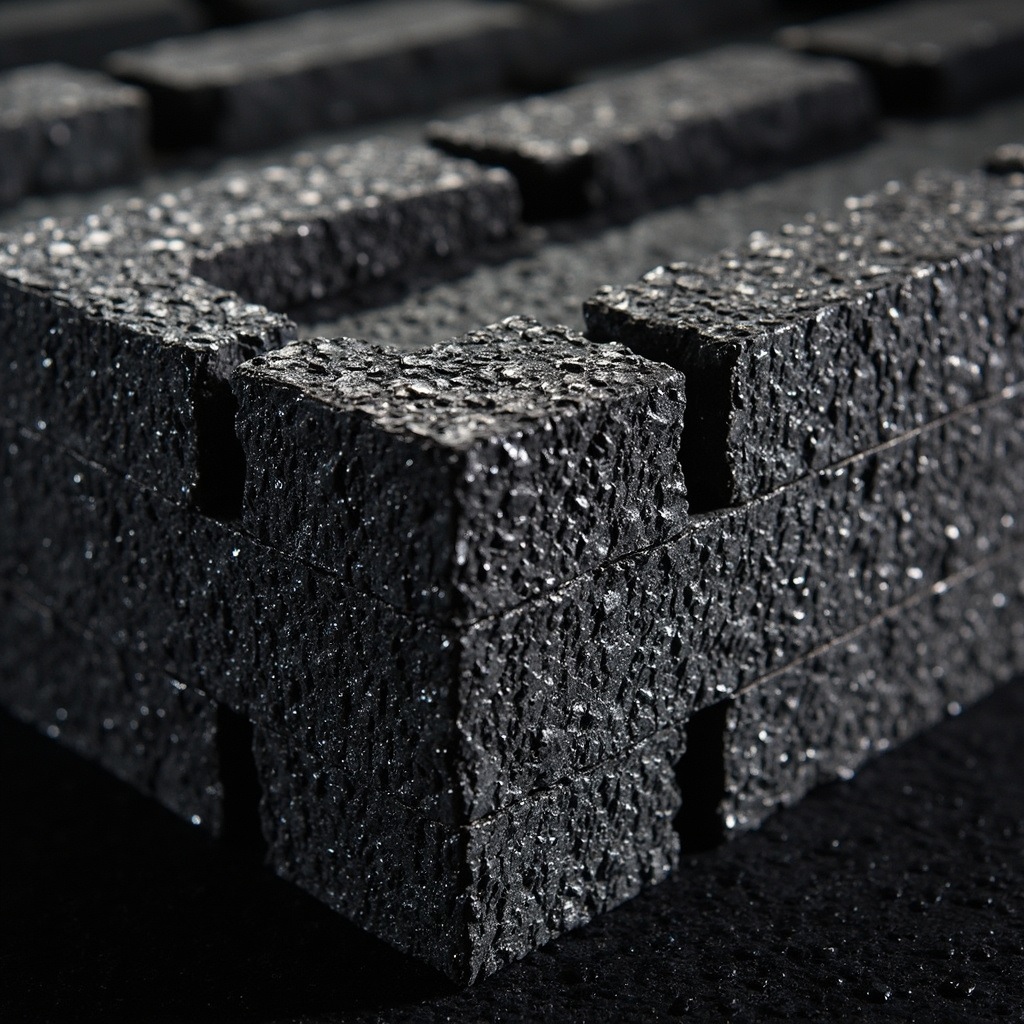
 You can have the strongest furnace in the world, but if your refractory lining oxidizes, you are basically running a very expensive campfire. And here is the ugly truth most suppliers won’t tell you: graphite is the heart of thermal shock resistance, but it burns. It burns fast when oxygen sneaks in. That is the single biggest failure point in high-temperature linings. So when we talk about Flake Graphite, we are not just talking about a black powder. We are talking about a strategic defense system.
Let’s cut the academic fluff. The oxidation resistance of flake graphite in refractory bricks is not a single trick. It is a layered, almost aggressive, survival mechanism. First, you have the natural crystalline structure. High-purity flake graphite has a highly ordered hexagonal lattice. This isn’t the dusty, amorphous stuff. The larger and more perfect the flake, the fewer reactive edge sites exist. Think of it like a fortress wall. A massive, single crystal flake has fewer cracks for oxygen to attack than a pile of crushed, jagged particles. The flake acts as a physical barrier, forcing oxygen to take a long, slow path around its basal planes rather than chewing through the edges.
But that is just the starting point. The real magic happens when you pair that flake with the right antioxidant additives. This is where the marketing meets the metallurgy. We are not selling a raw material; we are selling a survival strategy. When the temperature spikes above 800 degrees Celsius, the oxygen wants to react with the carbon. But if your flake graphite is coated or blended with materials like silicon carbide, boron carbide, or aluminum powder, the game changes completely. These additives are the sacrificial bodyguards. They oxidize first, forming a glassy, molten layer of silica or borosilicate right on the surface of the graphite flake.
This is the critical moment. That glassy layer is not just a coating; it is a sealant. It physically plugs the pores in the refractory brick and smothers the oxygen diffusion. The flake graphite underneath stays pristine, maintaining its high thermal conductivity and its ability to stop thermal shock in its tracks. Without that protective mechanism, your brick lining becomes a sponge for slag and a victim of spalling.
Here is the bottom line for anyone sourcing refractory materials: Do not buy flake graphite by price per ton. Buy it by its ability to resist annihilation. You want large flake size. You want high carbon content above 95 percent. And you absolutely demand a proven antioxidant system integrated into the brick formulation. A brick that looks good on paper but oxidizes in six months is a liability. A brick using high-grade flake graphite with a robust oxidation barrier will outlast the competition by cycles, not weeks.
Stop treating your furnace lining as a consumable. Treat it as a high-performance shield. The oxidation resistance mechanisms are there, but only if you choose the right flake. The rest is just expensive dust.